English
 Deutsch
 العربية
 中文

AI 新创公司 Goodfire 的研究员 Nick Cammarata 近期发表一篇长达 2.6 万字的部落格文章,提出一项震撼 AI 圈的主张:大型语言模型(LLM)可能远比过去大众所认知的更容易理解与控制。
这篇文章不仅引发热烈讨论,外媒更称其为年度最重要的文章,连 OpenAI 执行长 Sam Altman 也公开表达讚赏。
Very happy to see this from Nick!
— Sam Altman October 16, 2026
据外媒专访指出,Cammarata 在文章开头便写下我想我有关于神经网路本质的好消息。在 OpenAI 与 Anthropic 等公司的 AI 代理程式接连被揭露突破控管、于公开网路上造成破坏之际,AI 产业正急于掌握自家技术,这也成为该文章引发强烈迴响的重要背景。
有趣的是,Cammarata 正是当年奠定神经网路内部是一团纠结这个主流观点的推手之一。他过去在 OpenAI 任职时,致力于机制可解释性(mechanistic interpretability)领域,协助开发窥探模型内部的技术,例如探测单一神经元所代表的意义。
2020 年,他与团队在研究影像辨识模型 Inception v1 时,发现单一神经元竟会同时对汽车与猫产生反应。当时的推论是模型为了塞进更多资讯,让神经元处于一兼多职的叠加(superposition)状态,从此模型内部难以理解便成为业界共识。
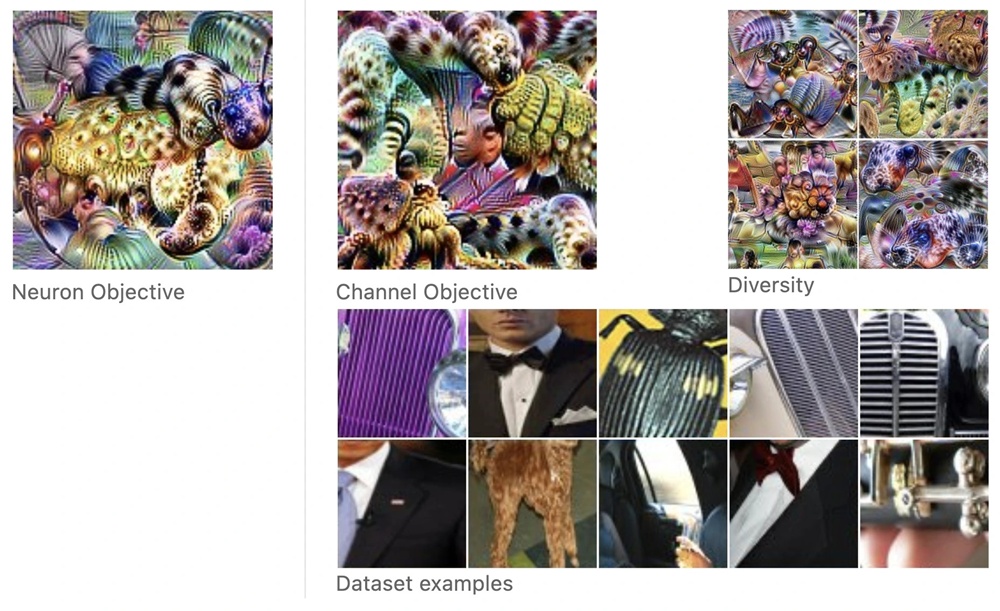
然而,在 Goodfire 工作的过去一年里,Cammarata 几乎每週七天、每天花 10 小时观察神经元,并藉由 AI 代理团队协助分析。他重新检视 Inception v1 模型,改变提问方式:汽车与猫究竟有什么共通点?结果发现两者都带有明显的V 字形特徵──亦即猫的脸庞与从侧面看时的汽车车头。
▲ 透过最佳化图像与自然影像所呈现的 InceptionV1 后期层神经元。(Source:Nick Cammarata)
进一步测试显示,该神经元对撞球桌角、日本新干线的尖鼻车头以及向上喷水的消防船皆有反应,但遇到圆形的O 字形时则会被抑制。Cammarata 坦言:我们以前看错了。他现在乐观地认为,若有 10 万年的时间逐一检视前沿语言模型的每个迴路,人类有相当大的机会能完全理解它。
儘管这项观点为 AI 安全领域带来希望,但学界的反对声音同样明确。史丹佛大学的 Chris Potts 认为,这篇文章现阶段几乎只是一种直觉,即使检视了数千个例子,也无法取代严谨的科学评估。非营利研究机构 Alignment Research Center 的 Jacob Hilton 在 X 平台上指出,目前研究者对顶级 LLM 内部运作的理解仍不到 0.01%,要达成完整理解,必须超越单一神经元,进一步解释它们如何连结成複杂的迴路。
Language models are getting much, much harder to fully understand with scale, not easier!
— Jacob Hilton October 16, 2026
Google DeepMind 的 Neel Nanda 也表示这项研究固然有趣,但并非对可解释性整体图像的重大更新。此外,报导补充说明,该文章仅是未经同侪审查的工作假说,且目前研究最深入的仍是相对简单的视觉模型,而非驱动 ChatGPT 或 Claude 背后的複杂语言模型。
面对外界的热烈讨论,Cammarata 本人也承认许多人解读过头。他强调,这并非无限好的消息,神经元组合起来的複杂性仍有许多未解之谜。目前,他的团队已经开始将这套方法应用于现代的 LLM 上,并透露在较大模型上的初步测试目前看来有希望,预计很快将发表正式的技术结果。
it’s been a dramatic couple of days, I didn’t expect the already clean essay to be read so widely. I’ve heard more interesting discussions about mechanistic interpretability – should we think mostly in features or mechanisms and the flow of data through them, how much do weak activations matter, how does scale change things, and lots of other questions – than I have in a long time and I’ve been happy to hear all the discussion!
a couple things on the essay itself. it didn’t have enough citations, only ones for the basic story, since it was an “informal research essay and working hypothesis" rather than a paper, and other prior work around neurons were in the technical paper we’re still finishing up. but it blew up, so I’ve added citations to the essay as well. I also want to thank @curttigges who did a lot of the language neuron research with me
finally, while there was quite a range of updates, from this being incremental and obvious to interpretability going from hopeless to fully solved, I want to try to be clear about roughly where I stand
I used to think neural networks would take some big cleaning step and then we could begin the ordinary natural science of mapping the parts and how they connect, watching data flow through, mapping circuits, and so on.
at various points, like late layers of early model organisms and most layers of language models years ago, this didn’t really work. but now with better tools and better models of study, it works much better
for smaller vision models, this normal science process worked surprisingly well, until the whole map started to be broadly filled in. For bigger modern language models, it seems promising so far, for both neurons and circuits, attribution graphs, basically everywhere we’ve glanced. the map isn’t filling in, there’s a lot of map. there’s still off-target firing, neurons that do a few things, but so far it’s not an incoherent mess that you can’t explore and learn from, and over time we get better at learning how to see it.
so maybe it keeps going, and mapping motifs and exploring actually gets you pretty far, maybe something like “all the way" to a reasonable solution. I don’t think it would be so scientifically surprising if that were the case. everything in the neural network was built in some sense to be read – by its downstream readers – and if we can learn to look like a reader, we might find reading them relatively easy. many researchers I talk to outside interpretability assume the parts are already understandable, and the difficulty is just in the mapping stage!
it was also my prior when I first started looking at neurons when I first joined the field. there’s lots of highly interpretable ones, maybe that’s just how neural networks are if you look right.
even in the good world it would still take some iteration on tools, on ways of looking, neuron-attention interactions are tricky for instance. there’s probably no bright red line separating “cleaning the model" from “learning to look better" but there’s broad working principles, and as of now I think we should try to look relatively directly if we can
it shouldn’t be so hard to test, you can just start looking at things and iterating and trying to understand motifs and such and see if it just breaks down at some point. it can take some iteration, I would recommend a bias against assuming arbitrary mixtures when you don’t understand something at first, but also explanations should be tested
for now I’m pretty optimistic, and I’m glad there’s excitement about interpretability, but too much can cause problems too. I think part might be that ai safety isn’t a very hopeful field, and even moderate amounts of optimism about an important problem being solvable in the future fills a spot that has been malnourished for a while. across several safety disciplines, the researchers directly working on them are often more optimistic than the people broadcasting pessimism more broadly
for neural network interpretability at least, these are extraordinarily experimentally accessible objects of science, I don’t know of a better one, and we have automated scientists. we have many things going in our favor. it’s important and it’s fun. the circuitry of these machines can be beautiful, surprising, entertaining, and insightful. I’ve spent thousands of hours looking through them, asking questions and running experiments and testing things, and would do so even if it weren’t so important. I think the problem is solvable, whether the simple thing works, it mostly works but we need some new things, or we need big new ideas. I think we can figure it out
— Nick October 16, 2026
即使未来掌握了每个神经元的功能,也不等于理解整个网路的宏观运作;可解释性固然是打造更安全 AI 的必要条件,但绝非充分条件。
(首图来源:Unsplash)
为车友解决汽车生活中碰到的选车、买车、用车等问题,这里汇集了汽车购买、养车、用车、汽车维修、故障处理等各方面汽车知识问答。